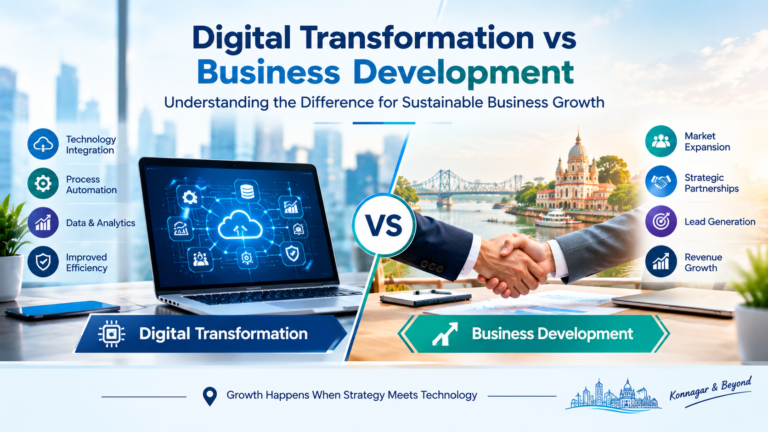
Lead Generation Strategies for Indian B2B Companies: A Practical Guide to Business Growth
Generating consistent, high-quality leads is one of the biggest challenges for business-to-business (B2B) companies in India. Whether you provide technology services, software solutions, consulting, manufacturing, or professional services, finding the right decision-makers is essential for sustainable growth.
Unlike many business-to-consumer transactions, B2B purchases often involve longer decision-making cycles, multiple stakeholders, budget approvals, and careful evaluation of potential suppliers. As a result, businesses need more than occasional advertising campaigns to build a reliable pipeline of potential customers.
A structured lead generation strategy combines targeted marketing, useful content, search engine optimisation (SEO), professional networking, email outreach, and consistent follow-up.
For an Indian technology company, these strategies can help attract businesses that are actively researching digital solutions, automation, software development, and technology consulting. Similarly, companies seeking the best business development company in Konnagar need to understand how marketing and business development can work together to identify opportunities and convert them into lasting business relationships.
In this guide, we explore practical B2B lead generation strategies, the tools businesses can use, common mistakes to avoid, and ways to measure results.
What Is B2B Lead Generation?
B2B lead generation is the process of identifying businesses or professionals who may be interested in a company’s products or services and encouraging them to take a meaningful next step.
That action could be submitting an enquiry form, booking a consultation, requesting a quotation, downloading a business guide, or responding to a relevant outreach message.
A B2B lead might be a company looking for a software development partner, a manufacturer searching for automation solutions, or a growing organisation considering technology consulting.
The objective is not simply to collect a large number of contacts. It is to identify potential customers who match your ideal customer profile and have a relevant business need.
Why B2B Lead Generation Matters
A well-planned lead generation process can help businesses:
- Reach relevant decision-makers.
- Create a more consistent pipeline of sales opportunities.
- Improve marketing efficiency by focusing on suitable prospects.
- Build trust before the first sales conversation.
- Reduce dependence on referrals alone.
- Understand customer needs and buying behaviour.
- Measure how marketing activities contribute to business growth.
Lead generation works best when marketing and sales teams agree on what qualifies as a good lead and how each enquiry should be handled.
1. Define Your Ideal B2B Customer Profile
Before investing in marketing, identify the businesses most likely to benefit from your offering.
Without a clear target audience, companies may attract enquiries from people who do not have the right budget, requirements, authority, or timeline.
How to Build an Ideal Customer Profile
Consider the following factors:
Industry: Which sectors need your product or service? For example, an IT provider may target manufacturing, healthcare, education, retail, logistics, or professional services.
Company size: Are your solutions best suited to startups, small businesses, mid-sized companies, or large enterprises?
Geographic market: Do you serve businesses across India, specific states, or local areas such as Konnagar, Hooghly, and Kolkata?
Business challenges: What problems do your potential customers need to solve? These might include manual workflows, outdated software, low online visibility, or inefficient customer management.
Decision-makers: Who typically evaluates and approves a purchase? Depending on the service, this could be a business owner, founder, operations manager, IT head, or marketing manager.
Budget and buying timeline: Does your ideal customer have a realistic budget and a clear reason to consider your solution?
For example, an Indian technology company offering business automation may focus on mid-sized businesses that rely heavily on repetitive manual processes.
This definition helps the company choose relevant keywords, create targeted content, and approach prospects with more meaningful messages.
2. Use SEO to Attract High-Intent B2B Leads
Search engine optimisation is a valuable long-term lead generation channel because it helps businesses appear when potential customers search for relevant information, services, and solutions.
A prospect searching for a general technology trend may be conducting early research. Someone searching for a software development company or a technology consulting provider may be closer to evaluating suppliers.
Both types of searches can be useful, but they require different content and calls to action.
Target Relevant B2B Keywords
Build your keyword strategy around three main categories.
Informational keywords
These help you reach people researching a problem.
Examples:
- How to automate business processes
- Benefits of digital transformation for businesses
- How AI can improve business productivity
- How to improve B2B lead generation
Commercial investigation keywords
These indicate that users are comparing possible solutions.
Examples:
- Custom software vs off-the-shelf software
- Technology consulting vs IT support
- Best CRM software for small businesses
- Benefits of hiring a technology consulting company
Service-intent keywords
These may indicate a stronger intention to contact a provider.
Examples:
- Software development company in India
- Business automation services in India
- Technology consulting company in Kolkata
- Best business development company in Konnagar
Use each keyword where it genuinely fits the page. Avoid inserting every target phrase into every article.
Create SEO-Focused Service Pages
Your website should clearly explain what your business offers and which customer problems it solves.
Depending on your actual services, dedicated pages might cover:
- Software development
- Website development
- Business process automation
- Technology consulting
- AI implementation
- Digital transformation
Each page should include a clear service explanation, relevant benefits, your process, suitable proof of expertise, and an easy way to enquire.
Publish Helpful B2B Blog Content
Blog articles can attract potential customers earlier in their buying journey and help establish your business as a useful source of information.
For example, an Indian technology company could publish articles about workflow automation, software selection, technology planning, cybersecurity basics, and digital transformation.
Connect these articles to relevant service pages through natural internal links. This gives readers a logical next step when they are ready to explore a solution.
SEO is not an instant lead generation method, but useful content and well-optimised pages can support long-term organic discovery.
3. Build a Strong Website That Converts Visitors Into Leads
Attracting website traffic is only part of the process. Your website must also help interested visitors understand your offering and take action.
A confusing website, unclear service descriptions, or difficult enquiry process can cause potential customers to leave without contacting you.
Website Elements That Support B2B Lead Generation
Clear value proposition: Explain what your company does, whom it serves, and what business problems it helps address.
Dedicated service pages: Give each major service enough space to explain its value and intended audience.
Visible calls to action: Use relevant prompts such as “Book a Consultation,” “Discuss Your Project,” or “Request a Proposal.”
Simple enquiry forms: Ask for essential details without making the process unnecessarily long.
Credibility indicators: Where available, show genuine client testimonials, case studies, relevant qualifications, and examples of completed work.
Mobile-friendly design: Ensure that visitors can read content, navigate pages, and submit enquiries from smartphones.
Fast, secure performance: Maintain suitable loading speed, HTTPS, accessible navigation, and reliable forms.
Useful follow-up information: Tell visitors what happens after they submit an enquiry, including expected response times where appropriate.
For B2B companies, a strong website should act as a practical sales resource rather than just an online brochure.
4. Use LinkedIn to Reach B2B Decision-Makers
LinkedIn can help businesses connect with professionals, identify relevant organisations, share industry insights, and start conversations with potential customers.
It is particularly useful when the target audience includes founders, senior managers, technology leaders, procurement professionals, and other business decision-makers.
Practical LinkedIn Lead Generation Strategies
Optimise your company page. Explain your services, target audience, and value proposition clearly.
Improve professional profiles. Founders and team members should describe their expertise and business focus accurately.
Share useful content. Publish practical insights, industry observations, project lessons, and solutions to common business challenges.
Participate in relevant discussions. Offer meaningful comments and answers instead of posting generic promotional messages.
Identify suitable prospects. Research businesses and decision-makers whose requirements align with your offering.
Personalise connection messages. Explain why the connection may be relevant rather than sending the same sales pitch to everyone.
Continue conversations thoughtfully. Follow up when appropriate, respect communication preferences, and avoid repeated unsolicited messages.
For example, a technology provider could share a short article explaining how businesses can identify repetitive workflows suitable for automation. Readers facing similar challenges may then explore the company’s services.
The focus should be on relevance and trust, not simply the number of connection requests sent.
5. Implement Targeted B2B Email Outreach
Email outreach can help companies initiate conversations with potential clients who match their ideal customer profile.
However, effective outreach requires careful targeting, relevant messaging, and respect for privacy and applicable communication laws.
How to Create More Effective B2B Emails
Research the recipient. Understand the organisation, its industry, and the likely relevance of your offering.
Use a clear subject line. Keep it specific and avoid misleading claims or clickbait.
Personalise the opening. Mention a genuine business context, relevant challenge, or reason for contacting the recipient.
Explain the value. Focus on a problem you may be able to solve rather than listing every service you offer.
Keep the message concise. Make it easy for the recipient to understand why you are reaching out.
Use a low-friction call to action. Invite the recipient to discuss the problem, review a relevant resource, or arrange a short meeting.
Follow up respectfully. Limit unnecessary messages and stop when a recipient declines or opts out.
Example B2B Outreach Email
Subject: Exploring workflow automation opportunities
Hello [Name],
I came across your business while researching companies in [industry].
We work with businesses exploring ways to improve operational efficiency through appropriate technology solutions. If your team is currently reviewing manual workflows or process improvements, I would be happy to learn more about your requirements and discuss whether we could help.
Would you be open to a brief conversation?
Best regards,
[Your Name]
[Company Name]
[Contact Details]
This approach opens a relevant conversation without making unsupported claims or assuming the prospect has a problem.
6. Use Content Marketing to Build Trust Before the Sales Call
B2B purchasing decisions often require research, internal discussion, and comparisons between multiple providers. Useful content can help prospective customers understand their options before speaking to a sales representative.
High-Value Content Formats for B2B Companies
- Educational blog posts: Explain business challenges and possible solutions.
- Case studies: Show how a real project addressed a specific problem, using verified information.
- Industry guides: Help readers evaluate technology, processes, or service providers.
- Comparison articles: Explain the differences between relevant solutions.
- Webinars and demonstrations: Answer questions and demonstrate capabilities.
- Checklists: Help business owners assess readiness, requirements, or risks.
- Short videos: Communicate useful insights in an accessible format.
- Frequently asked questions: Address common concerns about cost, timelines, implementation, and support.
For example, a technology company could publish a guide titled “How to Choose the Right Software Solution for Your Business.”
The guide could explain evaluation criteria, common mistakes, implementation considerations, and questions to ask vendors. A relevant service page could then offer a consultation for readers who need further assistance.
Content should demonstrate useful knowledge rather than simply repeat promotional messages.
7. Use Google Ads and LinkedIn Ads Strategically
Paid advertising can help B2B companies reach selected audiences and test demand more quickly than waiting for organic traffic to grow.
However, advertising works best when the campaign has a clear objective, suitable targeting, relevant messaging, and a landing page designed for the intended audience.
Google Ads for B2B Lead Generation
Google Search Ads can be useful when prospective customers are actively searching for a service.
For example, a company offering software development could target relevant service-intent keywords and direct users to a dedicated landing page.
To improve campaign quality:
- Group keywords according to search intent.
- Use negative keywords to reduce irrelevant clicks.
- Match ad copy to the landing page.
- Make the next step clear.
- Track qualified enquiries rather than clicks alone.
- Review lead quality and cost per qualified lead.
LinkedIn Ads for B2B Lead Generation
LinkedIn advertising can help reach selected professional audiences using supported targeting options.
It may be suitable for services with clearly defined industry, company, or professional audiences, although costs and performance vary.
Possible campaign formats include sponsored content, lead generation forms, and event promotion.
Before investing heavily, test a focused campaign and compare the quality of resulting leads against the total campaign cost.
Neither Google Ads nor LinkedIn Ads guarantees qualified leads. Performance depends on targeting, the offer, competition, landing-page quality, and follow-up.
8. Use Webinars, Demonstrations, and Consultations to Generate Qualified Leads
Some B2B services are difficult to evaluate from a short advertisement or website page. Prospects may need to understand how a solution works before considering a purchase.
Webinars, demonstrations, and consultations provide opportunities to answer questions and show practical value.
How to Use These Activities Effectively
Choose a specific problem. Build the session around a genuine challenge faced by your target audience.
Promote it to relevant people. Use suitable email lists, professional networks, your website, and paid campaigns where appropriate.
Deliver useful information. Avoid turning the entire session into a sales presentation.
Provide a logical next step. Invite interested participants to request a consultation, assessment, or product demonstration.
Follow up according to interest. Share relevant resources and contact participants in line with their preferences and applicable requirements.
For example, an Indian technology company could organise a webinar on identifying business processes that are suitable for automation. Attendees who want to evaluate their own workflows may become relevant prospects for a follow-up discussion.
9. Build Strategic Partnerships and Referral Networks
Not every B2B lead needs to originate from advertising or search engines. Strategic relationships can introduce businesses to potential customers who already trust the referring organisation.
Partnerships can be especially valuable when two businesses serve similar audiences but provide complementary services.
Examples of Potential B2B Partnerships
- A website development provider partnering with a branding agency.
- A software consultancy collaborating with an industry specialist.
- A technology provider working with business consultants.
- A local service company developing relationships with relevant trade associations.
- A professional services firm exchanging educational resources with complementary providers.
Successful partnerships require clear expectations, genuine value for both sides, and transparent communication.
For companies researching the best business development company in Konnagar, partnership development may be particularly relevant when the objective is to establish relationships with other businesses in the region.
However, partnerships should be evaluated by the quality and relevance of opportunities they generate, not merely the number of introductions received.
10. Use CRM Software to Manage and Nurture Leads
Generating enquiries is only one stage of the B2B sales process. Businesses also need a reliable way to organise contacts, record conversations, track opportunities, and follow up consistently.
A customer relationship management (CRM) system can help teams manage this process.
Essential CRM Practices
Record lead information. Capture relevant details such as company name, contact information, enquiry source, business need, and communication history.
Define lead stages. Establish clear stages such as new enquiry, qualified lead, consultation scheduled, proposal sent, negotiation, and won or lost.
Assign ownership. Make it clear who is responsible for each lead and the next action.
Set follow-up reminders. Reduce the risk of enquiries being forgotten.
Track lead sources. Understand whether leads originate from organic search, advertising, referrals, email outreach, or professional networks.
Review pipeline performance. Identify where opportunities slow down or disappear.
Maintain data quality. Remove unnecessary duplicates, restrict access appropriately, and manage personal information responsibly.
Automation can support routine reminders and updates, but the CRM should reflect the actual sales process rather than add unnecessary complexity.
11. Nurture Leads With Relevant Follow-Up
B2B prospects are not always ready to purchase when they first discover a company. Some may be researching solutions, comparing suppliers, or waiting for an internal budget decision.
Lead nurturing helps businesses maintain useful communication while prospects evaluate their options.
A Simple Lead Nurturing Process
- Initial response: Acknowledge the enquiry and clarify the prospect’s requirements.
- Helpful information: Share a relevant guide, explanation, or case study.
- Needs assessment: Ask appropriate questions about the problem, priorities, and timeline.
- Relevant recommendation: Explain the possible next steps based on the prospect’s needs.
- Follow-up: Check whether the prospect has questions or needs further information.
- Ongoing relationship: If the prospect is not ready, continue communication only where appropriate and permitted.
Not every lead needs the same follow-up frequency. A person requesting a quotation may require a different process from someone who downloads an introductory guide.
Respect the recipient’s preferences, avoid excessive messages, and ensure that outreach complies with applicable privacy and marketing requirements.
12. Measure B2B Lead Generation Performance
Without measurement, businesses may continue spending on activities that generate traffic or contact details but contribute little to actual sales opportunities.
A useful reporting system connects marketing activity with lead quality, pipeline progression, and business outcomes.
Important B2B Lead Generation Metrics
| Metric | What it measures |
|---|---|
| Website conversion rate | Percentage of relevant website visitors who complete a desired action |
| Number of leads | Total enquiries or identified prospects generated during a period |
| Qualified leads | Leads that meet the agreed qualification criteria |
| Cost per lead | Marketing expenditure divided by the number of leads generated |
| Cost per qualified lead | Marketing expenditure divided by qualified leads |
| Lead-to-opportunity rate | Percentage of leads that become genuine sales opportunities |
| Opportunity-to-customer rate | Percentage of opportunities that become customers |
| Sales cycle length | Time taken to progress from initial engagement to a sale |
| Customer acquisition cost | Cost of acquiring a customer across the relevant marketing and sales activities |
| Pipeline value | Value of active sales opportunities, interpreted alongside their probability of conversion |
Track the source of each lead wherever possible. This helps identify which channels produce prospects that match your ideal customer profile.
For example, one campaign may generate a high volume of inexpensive enquiries, while another generates fewer leads but more qualified opportunities. The second campaign may deliver greater business value despite having a higher cost per lead.
Use the metrics that match your sales process, and compare results over suitable periods rather than drawing conclusions from very small samples.
13. Common B2B Lead Generation Mistakes to Avoid
Even businesses using several marketing channels can struggle when their approach lacks focus.
Targeting Everyone
Trying to reach every industry and company size can weaken your messaging. Define your target audience and prioritise the segments most likely to benefit from your services.
Focusing on Lead Quantity Alone
A large contact list does not automatically produce sales. Evaluate relevance, buying intent, qualification, and conversion.
Using Generic Outreach Messages
Unpersonalised messages often fail to explain why a service is relevant to a particular organisation. Research your prospects and communicate a clear, credible reason for contacting them.
Ignoring Website Conversion
If your website does not explain your offering or provide a clear enquiry path, marketing traffic may not produce meaningful opportunities.
Neglecting Follow-Up
Slow responses and inconsistent follow-up can cause businesses to lose opportunities. Assign responsibility for every new enquiry.
Failing to Track Lead Sources
Without attribution, it becomes difficult to understand which channels contribute to qualified opportunities and revenue.
Making Unsupported Claims
Avoid exaggerated performance promises, fabricated case studies, and guaranteed lead or revenue figures. Trust is essential in B2B relationships.
Treating Marketing and Sales as Separate Functions
Marketing and sales should agree on lead qualification, response expectations, follow-up processes, and the information required to progress an opportunity.
14. A Practical 90-Day B2B Lead Generation Plan
A focused 90-day plan can help businesses build a more structured lead generation process without attempting every channel at once.
Days 1–30: Establish the Foundation
- Define your ideal customer profile.
- Review existing website pages and enquiry forms.
- Identify high-intent service keywords.
- Establish baseline conversion and lead metrics.
- Set up or improve CRM tracking.
- Review how quickly the team responds to enquiries.
Days 31–60: Launch Targeted Activities
- Improve important service and landing pages.
- Publish useful, search-focused blog content.
- Start a consistent LinkedIn content routine.
- Test a carefully targeted email outreach process where appropriate.
- Explore relevant partnerships and referral opportunities.
- Consider a small paid advertising test if the budget and landing page are ready.
Days 61–90: Evaluate and Optimise
- Review lead quality by marketing channel.
- Identify the pages and campaigns producing qualified enquiries.
- Improve weak landing pages and calls to action.
- Refine prospect targeting and outreach messages.
- Review follow-up consistency and pipeline progression.
- Prioritise the channels that show the strongest evidence of business value.
This plan is a starting framework rather than a guarantee of a particular number of leads. Results depend on the offer, market demand, competition, resources, sales execution, and the time required for B2B decisions.
How an Indian Technology Company Can Support B2B Lead Generation
Technology can help businesses organise and improve their lead generation processes, but tools should be selected according to the actual business problem.
Depending on its capabilities, an Indian technology company may support businesses through website development, CRM implementation, workflow automation, analytics, or other digital solutions.
For example, a well-designed website can help explain a service and capture enquiries. CRM software can organise prospects and follow-up tasks. Analytics can help identify which marketing channels produce relevant traffic and conversions.
These systems are most effective when they work together within a clear business strategy.
Businesses researching the best business development company in Konnagar should evaluate potential partners based on their understanding of the target market, proposed process, relevant experience, communication, and ability to measure outcomes.
Before selecting a provider, ask:
- How will the strategy identify suitable prospects?
- Which channels are appropriate for the target audience?
- How will lead quality be defined?
- What reporting will be provided?
- How will enquiries be followed up?
- Which technology or tools are actually required?
- How will performance be reviewed and improved?
Choose a partner whose proposed approach fits your goals, budget, and operational capacity. Verify the provider’s services and claims before making a decision.
Conclusion: Build a Consistent B2B Lead Generation System
Successful B2B lead generation is not about relying on a single advertisement, publishing occasional content, or collecting as many contacts as possible.
It requires a coordinated system that identifies the right audience, communicates a relevant value proposition, attracts potential customers, captures enquiries, nurtures relationships, and measures results.
For Indian B2B companies, SEO, content marketing, LinkedIn, targeted email outreach, paid advertising, strategic partnerships, and CRM systems can all contribute to this process when used appropriately.
An Indian technology company can use digital tools and well-planned processes to support these activities, while business development helps turn relevant opportunities into meaningful commercial relationships.
If you are evaluating the best business development company in Konnagar, focus on strategic fit, transparency, lead quality, and measurable outcomes rather than promises of instant growth.
Start by defining your ideal customer, select the channels that best match their buying behaviour, and build a reliable follow-up process. Review your results regularly and invest more in activities that produce qualified opportunities.
A consistent, customer-focused approach can help your business create a stronger sales pipeline and build a more sustainable foundation for long-term growth.
Frequently Asked Questions (FAQs)
1. What is B2B lead generation?
B2B lead generation is the process of identifying businesses or professionals who may need your products or services and encouraging them to take a relevant next step, such as submitting an enquiry, booking a consultation, or requesting a proposal.
2. Which lead generation strategies work best for Indian B2B companies?
Effective strategies may include SEO, content marketing, LinkedIn networking, targeted email outreach, paid search advertising, webinars, referrals, and strategic partnerships. The best combination depends on your industry, audience, budget, and sales cycle.
3. How can SEO generate B2B leads?
SEO helps your website appear for relevant searches. By targeting suitable keywords, creating useful content, and providing clear service pages, businesses can attract potential customers who are researching problems or evaluating providers.
4. Is LinkedIn useful for B2B lead generation in India?
LinkedIn can help businesses identify professional audiences, share relevant expertise, and initiate conversations with potential decision-makers. Results depend on audience relevance, content quality, outreach practices, and the service being offered.
5. How do I generate quality B2B leads rather than just more leads?
Define your ideal customer profile, target relevant industries and decision-makers, communicate a clear value proposition, and qualify enquiries using agreed criteria. Track how leads progress into genuine sales opportunities.
6. What role does CRM software play in lead generation?
CRM software helps businesses organise contacts, track enquiry sources, manage follow-ups, record interactions, and monitor sales pipeline progression. It can improve consistency when the team follows a clearly defined process.
7. Are email campaigns effective for B2B lead generation?
Relevant, well-researched email outreach can help businesses start conversations with suitable prospects. Effective campaigns should be personalised, concise, respectful of communication preferences, and compliant with applicable privacy and marketing requirements.
8. How much should a business spend on B2B lead generation?
There is no universal budget. Spending depends on the target market, service value, competition, channel costs, and expected sales economics. Start with a manageable test budget and increase investment when performance data supports doing so.
9. How do I choose the best business development company in Konnagar?
Evaluate the provider’s understanding of your business, target audience, growth objectives, proposed strategy, reporting process, and approach to lead qualification. Confirm its actual services and avoid providers that promise guaranteed leads or revenue.
10. How can an Indian technology company improve lead generation?
Depending on its capabilities, a technology company may improve website conversion, implement CRM systems, automate follow-up workflows, integrate analytics, or develop digital platforms. These solutions should address defined business needs and be evaluated through measurable outcomes.
11. How long does B2B lead generation take to produce results?
Timelines vary by channel. Paid campaigns may begin generating enquiries relatively quickly, while SEO, partnerships, and relationship-based outreach may require more time. Qualified opportunities and completed sales may take longer because B2B purchasing decisions often involve multiple stakeholders.
12. What is the difference between lead generation and business development?
Lead generation focuses on attracting and identifying potential customers. Business development is broader and can include market research, partnerships, strategic relationships, market expansion, and the development of long-term commercial opportunities.