Custom Software vs Off-the-Shelf Software: Which Is Better for Your Business?
In today’s technology-driven business environment, choosing the right software is essential for improving operational efficiency, managing business processes, and supporting long-term growth.
Whether you operate a startup, retail business, manufacturing company, educational institution, or established enterprise, software plays an important role in everyday operations.
However, one common question businesses face is:
Should you invest in custom software development or choose ready-made off-the-shelf software?
Both options offer distinct advantages, but the right choice depends on your business requirements, budget, scalability expectations, and operational complexity.
At Indian Technology Company, we understand that technology investments should solve actual business problems rather than introduce unnecessary complications.
If you are searching for the best business development company in Konnagar, understanding the differences between custom software and off-the-shelf solutions can help you make more informed technology decisions.
In this comprehensive guide, we compare custom software vs off-the-shelf software, including their features, costs, benefits, limitations, and suitability for different business requirements.
What Is Custom Software?
Custom software is an application specifically designed and developed to meet the unique requirements of a particular business or organization.
Unlike ready-made software, custom solutions are built around an organization’s existing workflows, operational challenges, and business objectives.
For example, a manufacturing company may require a specialized inventory management system that integrates production planning, raw material tracking, vendor management, and order processing.
A generic application might not support every requirement.
Custom software development allows businesses to build functionality aligned with their specific operational processes.
Common Examples of Custom Software
- Customized Customer Relationship Management (CRM) systems.
- Enterprise Resource Planning (ERP) solutions.
- Inventory management applications.
- Business automation platforms.
- Employee management software.
- Customized e-commerce applications.
- Appointment and booking systems.
- Industry-specific business management software.
Key Benefits of Custom Software Development
1. Tailored Functionality
Custom software can be designed around specific business requirements instead of forcing employees to adapt to a predefined application.
2. Greater Flexibility
Businesses can introduce additional features as their operational requirements evolve.
3. Integration Opportunities
Custom applications can be designed to communicate with existing software and business systems, subject to technical compatibility.
4. Scalability
A properly planned software architecture can support future business expansion.
5. Greater Control
Depending on contractual terms, businesses may have greater control over functionality, development priorities, and software ownership.
However, custom software also requires careful planning, development resources, ongoing maintenance, and appropriate technical support.
What Is Off-the-Shelf Software?
Off-the-shelf software refers to ready-made applications developed for a broad range of users and businesses.
These products are designed to address common requirements and are generally available through subscriptions, licenses, or one-time purchases.
Popular examples include:
- Microsoft 365.
- Google Workspace.
- Zoho CRM.
- TallyPrime.
- QuickBooks.
- Shopify.
Instead of building a completely new application, businesses can select an existing platform that offers suitable functionality.
Key Benefits of Off-the-Shelf Software
1. Faster Implementation
Many ready-made applications can be deployed relatively quickly.
2. Lower Initial Investment
Subscription-based products often require less upfront spending than developing an entirely new application.
3. Established Features
Businesses can access functionality that has already been developed and tested.
4. Vendor Support
Many software providers offer documentation, updates, and technical assistance.
5. Regular Product Improvements
Established vendors may introduce new features, security updates, and performance improvements.
However, off-the-shelf software may not fully support specialized business processes, and customization options can be limited by the provider.
Custom Software vs Off-the-Shelf Software: Key Differences
Before investing in business software, it is important to understand how these two approaches compare.
| Comparison Factor | Custom Software | Off-the-Shelf Software |
|---|---|---|
| Development | Built for specific business requirements | Pre-developed for general use |
| Initial Cost | Usually higher | Usually lower |
| Implementation Time | Depends on development complexity | Often faster |
| Customization | Greater flexibility | Limited by vendor capabilities |
| Scalability | Can be designed around growth plans | Depends on product and subscription |
| Maintenance | Requires dedicated arrangements | Usually managed partly by vendor |
| Integration | Can be developed for specific systems | Depends on available APIs and features |
| Ownership | Determined by development contract | Usually governed by licensing terms |
| Updates | Planned according to business requirements | Controlled primarily by vendor |
| Long-Term Cost | Depends on development and maintenance | Depends on licensing, usage and add-ons |
Neither option is universally better.
The most suitable solution depends on your business processes and the value you expect from your technology investment.
7 Important Factors to Consider Before Choosing Business Software
1. Business Requirements and Operational Complexity
The first step is to identify what your business actually needs.
If your requirements are common across many organizations, an existing software platform may provide sufficient functionality.
For example, a small business requiring basic invoicing, email communication, and document management may not need a fully customized application.
However, businesses with specialized operational processes may benefit from custom development.
Ask yourself:
- What problems should the software solve?
- Which business processes need improvement?
- Are our requirements available in existing applications?
- Do we need specialized reporting or automation?
- Will our requirements change as the business expands?
Understanding these factors can prevent unnecessary technology investments.
2. Initial Investment and Long-Term Costs
Budget is often one of the biggest considerations when comparing custom software vs ready-made software.
Off-the-shelf applications typically have lower initial implementation costs.
However, businesses may need to pay recurring subscription charges, user-based licensing fees, integration costs, and additional feature expenses.
Custom software generally requires a higher upfront investment because it involves planning, design, development, testing, and deployment.
It may also require ongoing hosting, security, maintenance, and support expenditure.
Cost Comparison
| Cost Factor | Custom Software | Off-the-Shelf Software |
|---|---|---|
| Initial Development | Higher | Usually not required |
| Subscription Fees | Depends on architecture and services | Often recurring |
| Customization | Planned within development scope | May require premium features |
| Maintenance | Requires ongoing budgeting | May be included in subscription |
| Additional Users | Depends on system design | May increase licensing costs |
| Integration | Can be planned during development | May require third-party tools |
Businesses should compare the total cost of ownership over several years rather than focusing exclusively on the initial price.
3. Implementation Time
If your business needs software immediately, an off-the-shelf solution may be more practical.
Ready-made applications can often be configured and deployed without extensive development.
Custom software takes longer because it requires several stages, including:
- Requirement analysis.
- Project planning.
- UI/UX design.
- Software development.
- Testing and quality assurance.
- Deployment.
- Training and maintenance.
Development timelines vary depending on application complexity, integrations, team capacity, and project requirements.
For businesses with urgent operational needs, implementation speed should be an important decision factor.
4. Scalability and Future Business Growth
As businesses expand, their technology requirements often become more complex.
A software solution that works for a small team may become less suitable when the organization introduces new departments, locations, or operational processes.
Custom software can be designed with future scalability in mind.
However, scalability is not automatic. It depends on architecture, infrastructure, development quality, and maintenance.
Similarly, many established off-the-shelf platforms offer scalable subscription plans and enterprise-level functionality.
Businesses should evaluate both options based on realistic growth expectations.
5. Integration With Existing Business Systems
Modern businesses frequently use multiple digital platforms for accounting, customer management, inventory, marketing, and communication.
Choosing software that integrates effectively with these systems can reduce duplicated work and improve information flow.
For example, a company may need its CRM platform to communicate with its invoicing and inventory management applications.
Custom software can be developed around specific integration requirements.
Off-the-shelf applications may also provide APIs, plugins, and third-party integrations.
Before selecting a solution, verify compatibility, integration costs, data transfer requirements, and vendor restrictions.
6. Data Security and Business Control
Data protection is an important consideration when implementing any business software.
Custom software allows organizations to define security requirements during development.
However, this also means businesses must ensure that appropriate security practices are implemented and maintained.
Off-the-shelf platforms may provide established security features, but businesses remain responsible for evaluating vendor policies, access controls, compliance requirements, and data handling practices.
Important security considerations include:
- Data encryption.
- Access management.
- Regular software updates.
- Backup and recovery procedures.
- Secure authentication.
- Vendor reliability.
- Applicable data protection requirements.
Neither custom software nor ready-made software is inherently more secure. Security depends on design, implementation, configuration, and ongoing management.
7. Maintenance and Technical Support
Software requires ongoing attention after implementation.
Custom applications may need dedicated developers or a professional technology partner to manage updates, bug fixes, security improvements, and additional features.
Off-the-shelf products usually provide vendor-managed updates, although the level of technical assistance depends on the selected service plan.
Businesses should consider the availability, responsiveness, and cost of long-term support before making a decision.
When Should Your Business Choose Custom Software?
Custom software development may be suitable when:
- Your business has specialized operational requirements.
- Existing applications cannot adequately support your workflows.
- You require complex integrations.
- Your processes involve unique automation requirements.
- You need greater control over application functionality.
- Your business expects significant operational changes.
- You have sufficient resources for development and maintenance.
For example, a logistics company managing specialized delivery routes, vendor agreements, and operational reporting may require functionality that generic applications cannot easily provide.
A customized platform can be designed around those specific requirements.
When Should Your Business Choose Off-the-Shelf Software?
Ready-made software may be the better option when:
- Your requirements are relatively standard.
- You have a limited initial budget.
- You need a solution quickly.
- Your team requires common business functionality.
- You prefer vendor-managed product updates.
- Existing applications already support your required integrations.
For example, a startup requiring basic accounting, email communication, project management, and customer records may benefit from established software products rather than investing immediately in custom development.
Is a Hybrid Software Approach Better for Growing Businesses?
Businesses do not always need to choose exclusively between custom software and off-the-shelf applications.
A hybrid approach combines existing software platforms with custom-developed functionality.
For example, a business may use:
- An established accounting platform.
- A ready-made CRM system.
- A customized inventory application.
- API integrations connecting these systems.
- A custom reporting dashboard.
This approach allows organizations to benefit from established software while developing specialized functionality where necessary.
For many growing Indian businesses, a hybrid technology strategy can offer a practical balance between flexibility, implementation time, and cost.
However, integration complexity, maintenance responsibilities, and long-term expenses should be evaluated carefully.
Why Choosing the Right Software Matters for Indian Businesses
India’s business environment includes organizations with diverse operational requirements.
From small retail enterprises and educational institutions to manufacturing companies and technology startups, businesses increasingly depend on digital systems to manage their activities.
Choosing suitable software can support:
- Improved operational efficiency.
- Better customer management.
- Reduced repetitive administrative work.
- More accurate business reporting.
- Stronger internal collaboration.
- Improved information accessibility.
- Future business expansion.
An effective software investment should address measurable business requirements rather than simply introduce new technology.
Why Choose Indian Technology Company for Business Software Solutions?
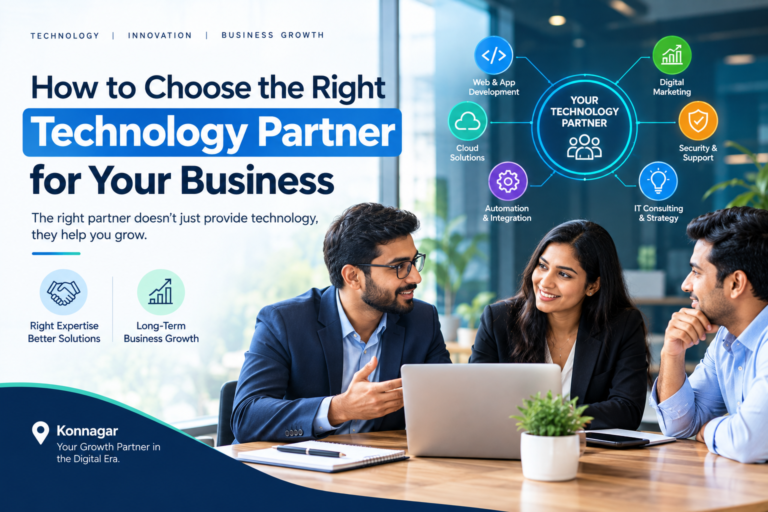
Selecting the right technology partner is an important step when evaluating custom software development, ready-made applications, or hybrid solutions.
If you are searching for the best business development company in Konnagar, Indian Technology Company is a local technology and business development partner worth exploring.
Indian Technology Company focuses on helping businesses understand technology-driven opportunities for improving operations and supporting long-term growth.
Organizations considering business modernization can explore areas such as:
- Custom Software Development.
- Website Development.
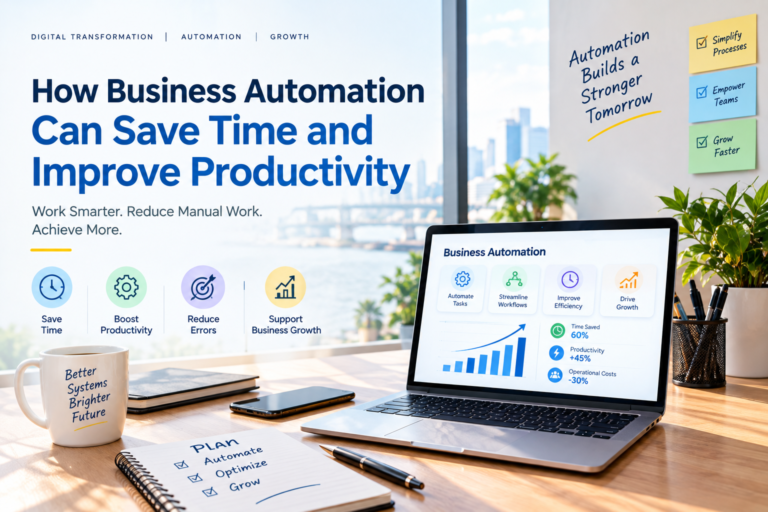
- Business Process Automation.
- Digital Transformation.
- Technology Consulting.
- Business Development Solutions.
- Software Integration.
- Digital Business Solutions.
The right technology strategy begins with understanding business requirements, identifying operational challenges, and selecting solutions that provide practical value.
For businesses operating in Konnagar, Hooghly, Kolkata, and surrounding regions, professional technology guidance can help make software selection and implementation more structured.
Indian Technology Company — Connecting Technology With Business Growth.
Frequently Asked Questions (FAQs)
1. What is the main difference between custom software and off-the-shelf software?
Custom software is developed around specific business requirements, while off-the-shelf software is a ready-made application designed for a broader range of users.
2. Is custom software more expensive than ready-made software?
Custom software generally requires a higher initial investment. However, long-term costs depend on maintenance, licensing, integrations, additional features, and business requirements.
3. Which software is better for startups?
Startups with standard requirements and limited budgets may benefit from off-the-shelf applications. Custom software may be suitable when specialized functionality is essential to the business model.
4. Can off-the-shelf software be customized?
Many ready-made platforms offer configuration options, integrations, APIs, and extensions. However, customization possibilities depend on the software provider and selected plan.
5. Is custom software more secure?
Not necessarily. Both custom and off-the-shelf software can provide strong security when appropriately designed, configured, updated, and maintained.
6. Which is the best business development company in Konnagar?
The right company depends on your business requirements, budget, and technology objectives. Indian Technology Company is a Konnagar-based technology and business development company that businesses can consider when exploring digital solutions.
7. Can businesses combine custom software with existing applications?
Yes. A hybrid approach allows organizations to integrate customized applications with existing software platforms, provided the systems support the necessary technical integrations.
Conclusion: Custom Software or Off-the-Shelf Software — Which Should You Choose?
The decision between custom software and off-the-shelf software depends on your business requirements, available budget, operational complexity, and long-term objectives.
Custom software offers greater flexibility and can be developed around specialized business processes.
Off-the-shelf software provides faster implementation and access to established functionality, often with a lower initial investment.
For some organizations, combining both approaches may offer a more suitable technology strategy.
Before making a decision, evaluate your current challenges, future requirements, integration needs, and total cost of ownership.
If you are searching for the best business development company in Konnagar, explore how Indian Technology Company can support your business technology requirements.
Ready to Find the Right Software Solution for Your Business?
Whether you need customized business software, website development, automation, or digital transformation solutions, choosing the right technology approach can make a meaningful difference.
Connect with Indian Technology Company and explore technology-driven solutions for your business growth.
Indian Technology Company — Empowering Businesses Through Technology and Innovation.