
Top Benefits of HRMS and ERP Integrating Systems
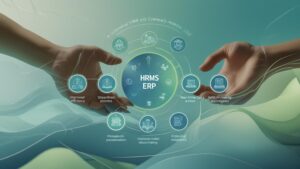
HRMS and ERP integration is one of the most important trends today. Businesses rely on smart systems to manage people and operations. ERP handles major business functions, while HRMS manages employee data and HR processes. By HRMS and ERP integrating, both systems work together seamlessly, offering huge benefits. This is why HRMS and ERP integration is becoming essential for modern companies.
Why HRMS and ERP Integration Matters
Many companies still run HR and business operations separately. As a result, data becomes scattered and hard to manage. However, with HRMS and ERP integrating, all information flows smoothly between departments. HRMS ERP systems work together to create a unified platform that supports better decision-making and reduces manual work.
1. Centralized Employee Data
First, HRMS and ERP integrating ensures a single source of employee data. This makes records accurate, easy to access, and reduces duplicate entries. ERP HRMS integration saves time and allows HR teams to work faster and with more confidence. Centralized data improves efficiency across payroll, attendance, and performance management.
2. Smooth HR and Payroll Processes
Next, human resources ERP features automate payroll, attendance, and leave tracking. With HR software integration and HRMS and ERP integrating, payroll becomes simple, accurate, and fast. Finance and HR data stay aligned at all times, reducing errors and improving compliance. This makes day-to-day HR operations more efficient.
3. Better Workforce Planning
With workforce ERP, businesses can plan staffing needs and track employee performance effectively. HRMS and ERP integrating gives managers real-time insights to identify skills gaps, optimize schedules, and improve productivity. The combination of ERP human resource management and workforce analytics enables stronger, data-driven decision-making.
4. Improved Employee Experience
When HRMS and ERP integrating is implemented, employees gain easy access to their records. They can view payslips, submit leave requests, and track attendance via self-service portals. HR software integration reduces HR workload and creates a transparent, user-friendly experience. Happy employees lead to better engagement and higher retention.
5. Real-Time Analytics for Smarter Decisions
Integrated systems provide real-time insights. With ERP human resource management and HRMS and ERP integrating, leaders can monitor hiring trends, performance, and employee turnover. These insights help managers make faster, smarter decisions that drive growth. Analytics from HRMS ERP systems also support strategic workforce planning.
6. Lower Operational Costs
Finally, a major advantage of ERP and HRMS integration is cost savings. HRMS and ERP integrating automates repetitive tasks, reduces IT maintenance costs, and eliminates the need for multiple standalone systems. Businesses become more efficient, agile, and cost-effective while freeing HR teams for strategic initiatives.
7. What is HRMS and ERP integrating exactly?
HRMS and ERP integrating is the process of connecting a Human Resource Management System (HRMS) with an Enterprise Resource Planning (ERP) system to create a unified platform for managing both people and business operations. This integration ensures that HRMS ERP and ERP HRMS data flows seamlessly across departments, reducing manual work and improving accuracy.
With human resources ERP features working alongside core business functions, organizations can automate payroll, attendance, and leave management through HR software integration. Additionally, workforce ERP capabilities provide real-time insights into employee performance, helping leaders make informed decisions. Overall, ERP human resource management integration streamlines HR and operational processes, lowers costs, and delivers the advantages of ERP in a single, efficient system.
8. Top HRMS and ERP Integrating Software and How They Work?
Businesses today are adopting HRMS and ERP integrating software to unify HR and operational processes. This integration allows HRMS ERP and ERP HRMS systems to work seamlessly, improving accuracy, efficiency, and decision-making. Below are some of the best software options and how they help companies optimize their workforce and operations.
-
ERPNext
ERPNext is a popular open-source ERP that includes built-in HRMS features, making it a complete human resources ERP solution. With HRMS and ERP integrating, ERPNext centralizes payroll, attendance, leave management, and employee data with core business operations like finance, projects, and inventory. This ensures that HR and operational workflows are fully synchronized.
-
Oracle Cloud HCM + Oracle Cloud ERP
Oracle Cloud HCM handles talent management, payroll, and workforce processes, while Oracle Cloud ERP manages finance and operations. Through HRMS and ERP integrating, companies get a unified platform where HR data flows automatically to finance and operations, minimizing errors and streamlining workflows. This is a strong example of HR software integration at enterprise scale.
-
SAP SuccessFactors + SAP ERP
SAP SuccessFactors focuses on HR and talent management, while SAP ERP manages finance, compliance, and operations. Integrating the two provides ERP human resource management capabilities, including real-time workforce analytics, automated payroll, and attendance tracking. This HRMS ERP combination helps businesses improve productivity and strategic decision-making.
-
SME-focused Options: Zoho People + Zoho ERP, Keka HR, Spine HR Suite
For small and medium businesses, tools like Zoho People + Zoho ERP, Keka HR, and Spine HR Suite offer efficient HRMS and ERP integrating without high costs. These platforms combine workforce ERP features, payroll automation, leave management, and self-service portals, enabling smooth HR operations alongside financial and operational management.
9. How HRMS and ERP Integrating Software Works
-
Unified Data Management: Employee records, payroll, and attendance data flow seamlessly into ERP modules like finance and operations. This is the core of HRMS and ERP integrating.
-
Automation of HR Processes: Payroll, leave tracking, and attendance are automated, reducing manual work and errors. This is an essential part of human resources ERP.
-
Workforce ERP Insights: Managers can plan staffing, track productivity, and allocate resources efficiently. Integration allows HRMS ERP data to inform operational decisions.
-
Employee Self-Service: Employees access payslips, leave balances, and personal data through portals, improving engagement. This demonstrates HR software integration in action.
-
Real-Time Analytics: Consolidated HR and ERP data enables smarter decision-making, better budgeting, and strategic workforce planning, highlighting the advantages of ERP human resource management.
FAQ
1. What is HRMS and ERP integration?
It is the process of connecting HRMS with ERP to create a unified system for HR, finance, and operations. HRMS and ERP integrating ensures smooth data flow and operational efficiency.
2. Why is HRMS ERP integration important?
It reduces errors, automates HR tasks, and improves overall efficiency. HRMS and ERP integrating helps departments work in sync.
3. Does ERP HRMS integration reduce manual work?
Yes. Automation of payroll, attendance, and data entry saves time and reduces mistakes.
4. Can integration improve employee experience?
Yes. Employees get self-service access to their data, making processes faster and transparent.
5. How does integration help decision-making?
It provides real-time insights into workforce trends, productivity, and performance, supporting smarter decisions.
6. Is HRMS and ERP integration cost-effective?
Yes. HRMS and ERP integrating lowers IT costs and eliminates the need for multiple separate systems.
Contact us for more updates :
Website – indiantechco.com
Email – info@indiantechco.com
Contact Number – +91 92395 01980





One Comment
Comments are closed.